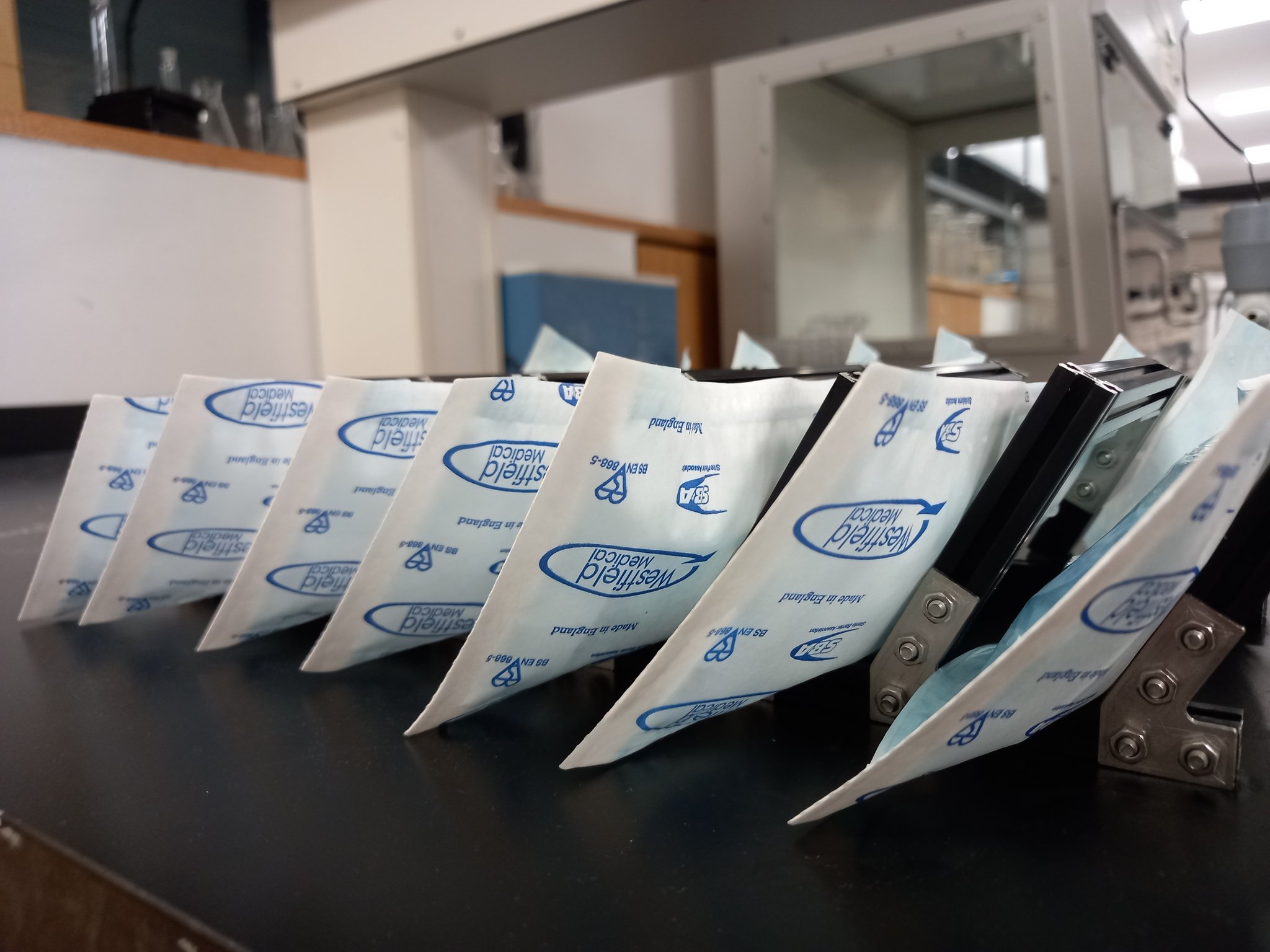
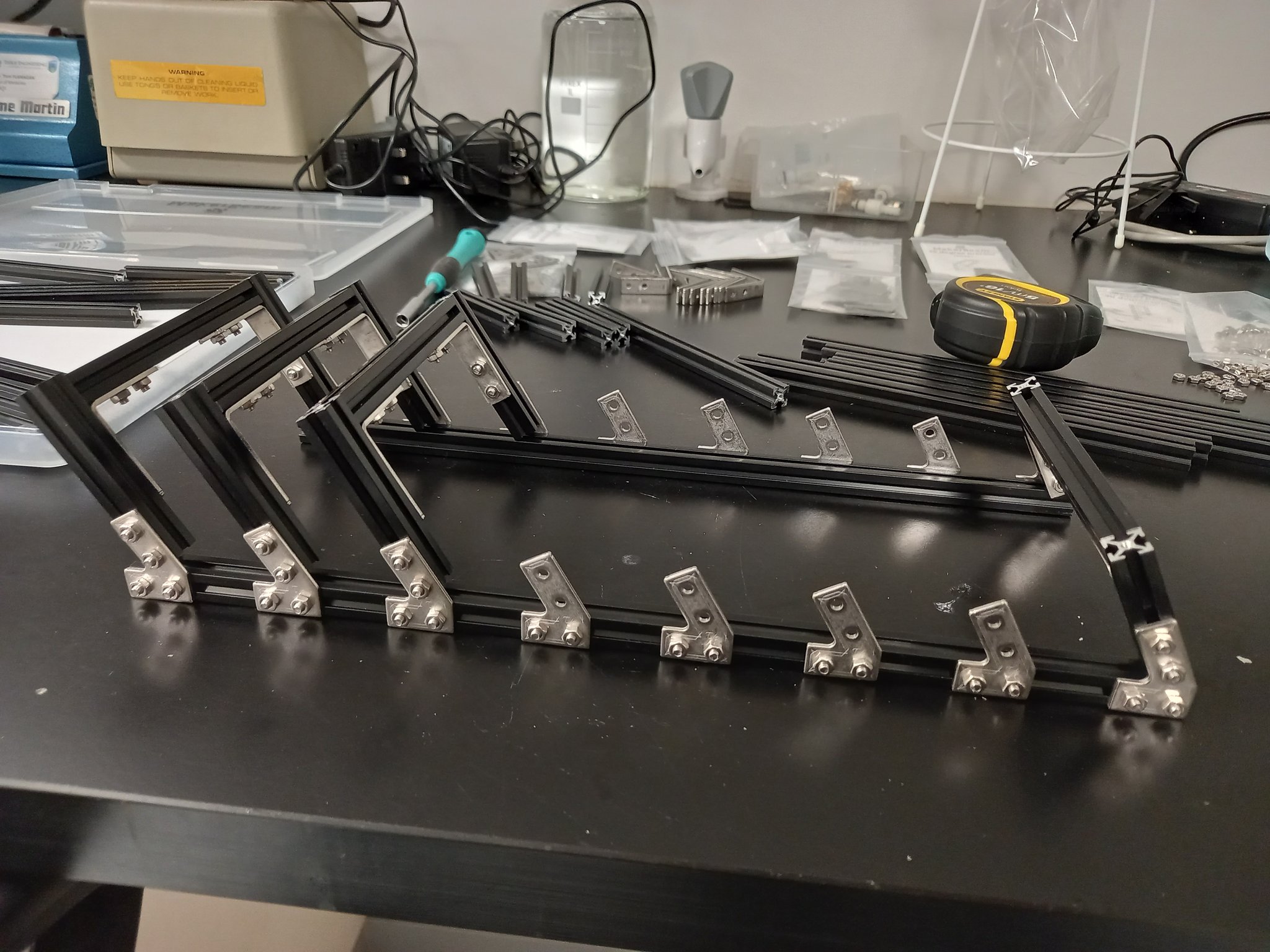
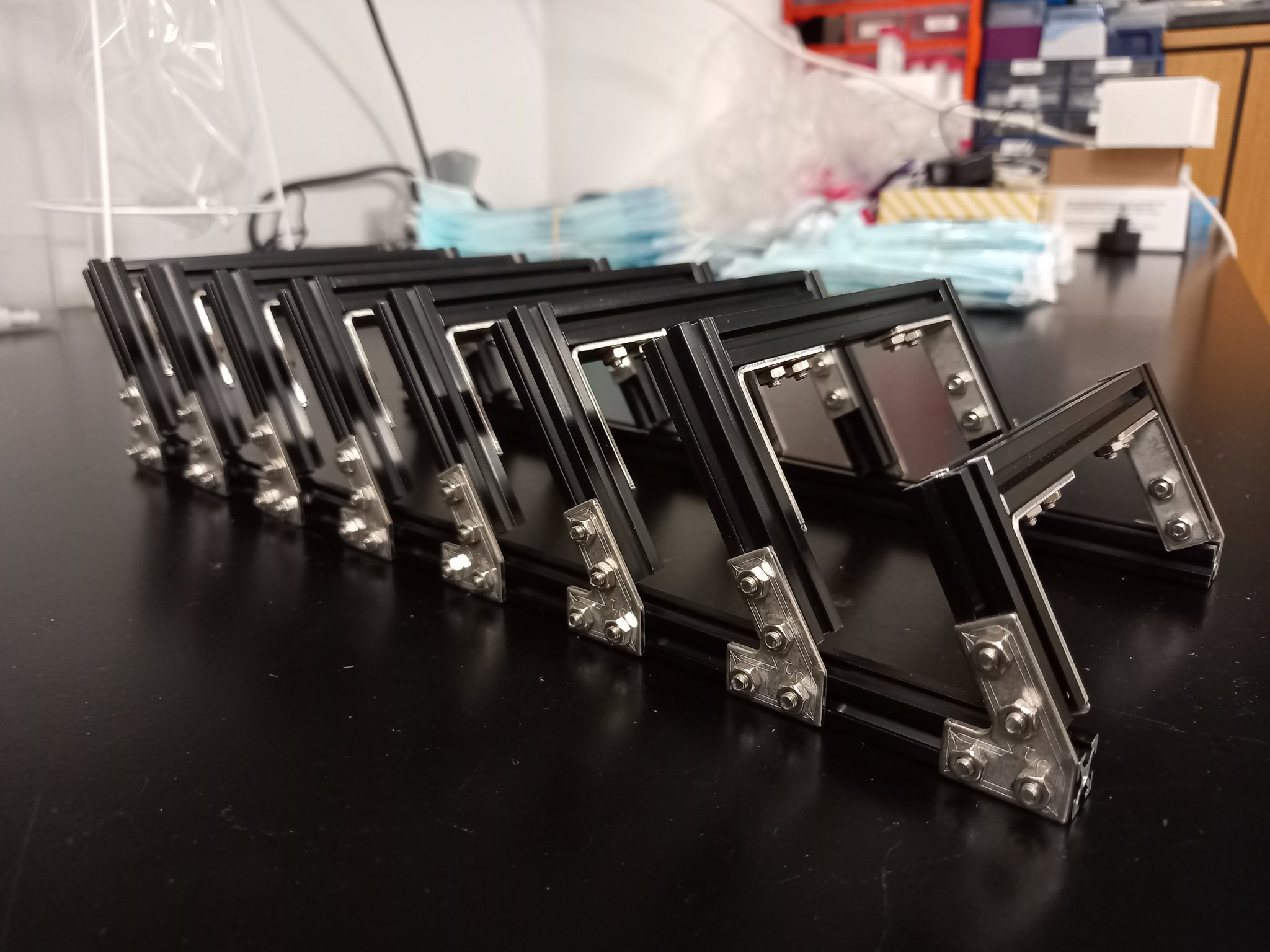
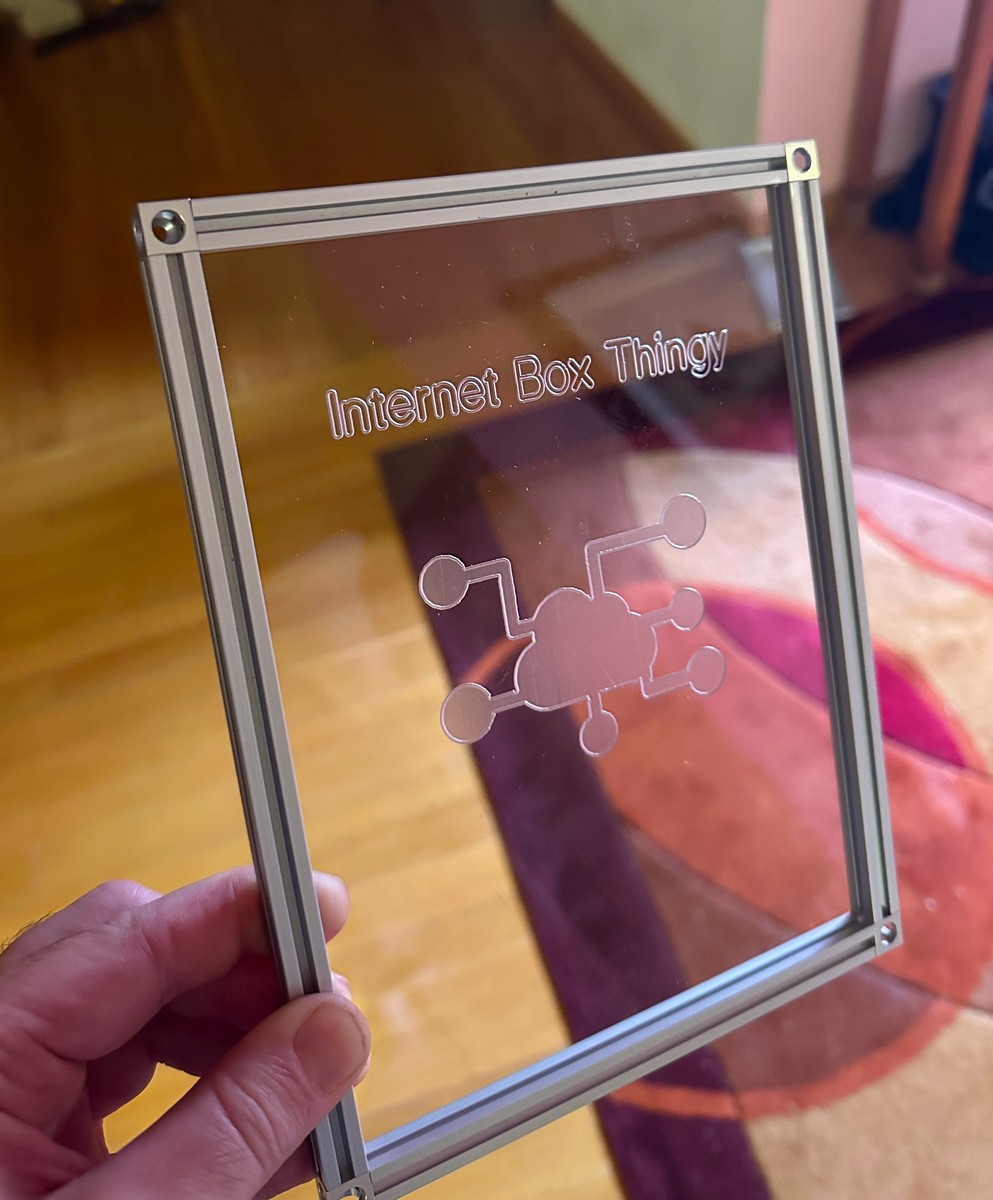
New MakerBeam products: Wing type bolts and Hinge bearings

Wing type bolts and hinge bearings: available in our webshop as of today.

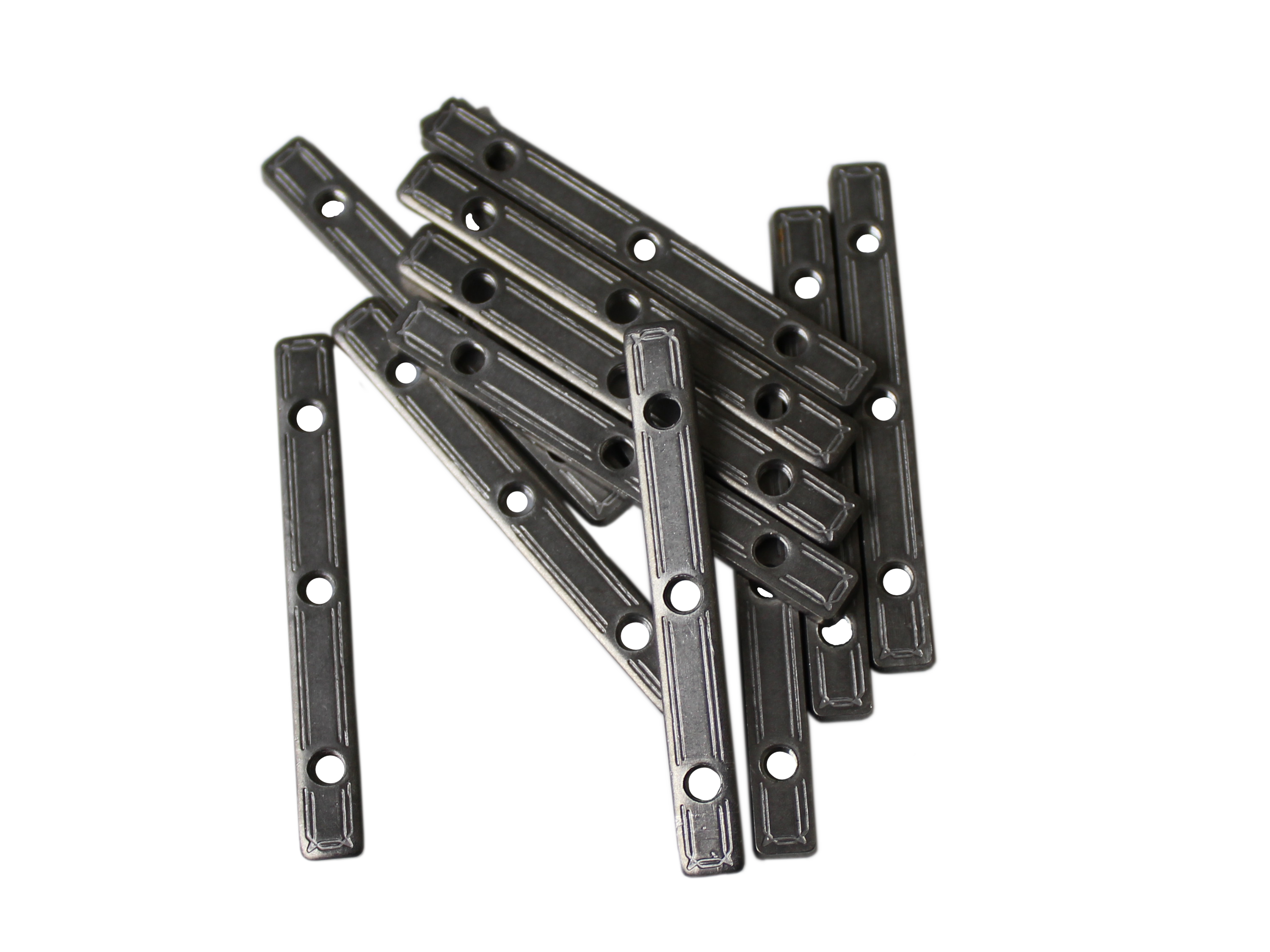
Wing type bolts
On our wish list it still read ‘wing type bolt’.  The possibility to slide in a bracket midway between brackets already fastened was our aim.

When fastening a bracket to a beam the square headed bolts need to be slided into the beginning of the beam. This is not a problem when your project is all clear and you know exactly what you want to fasten. But when you decide to add brackets between other brackets you need to loosen and remove a bracket before you can add another one. This is time consuming and our wish was to come up with a bolt that would make it easier to add screws to an almost finished structure.

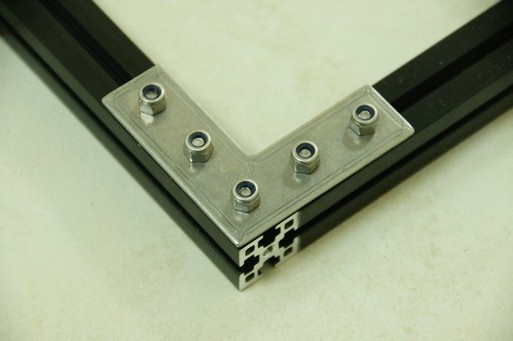
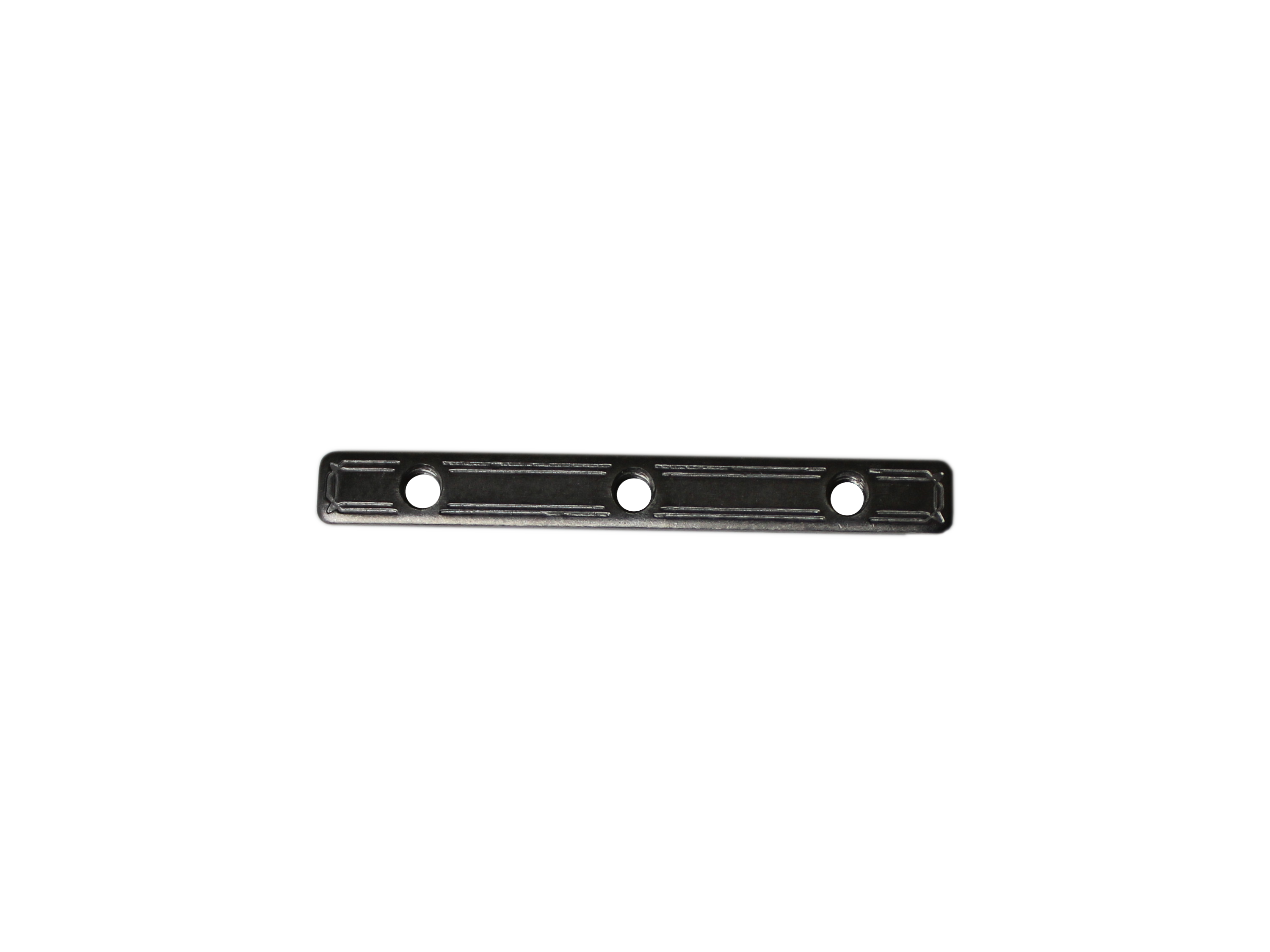
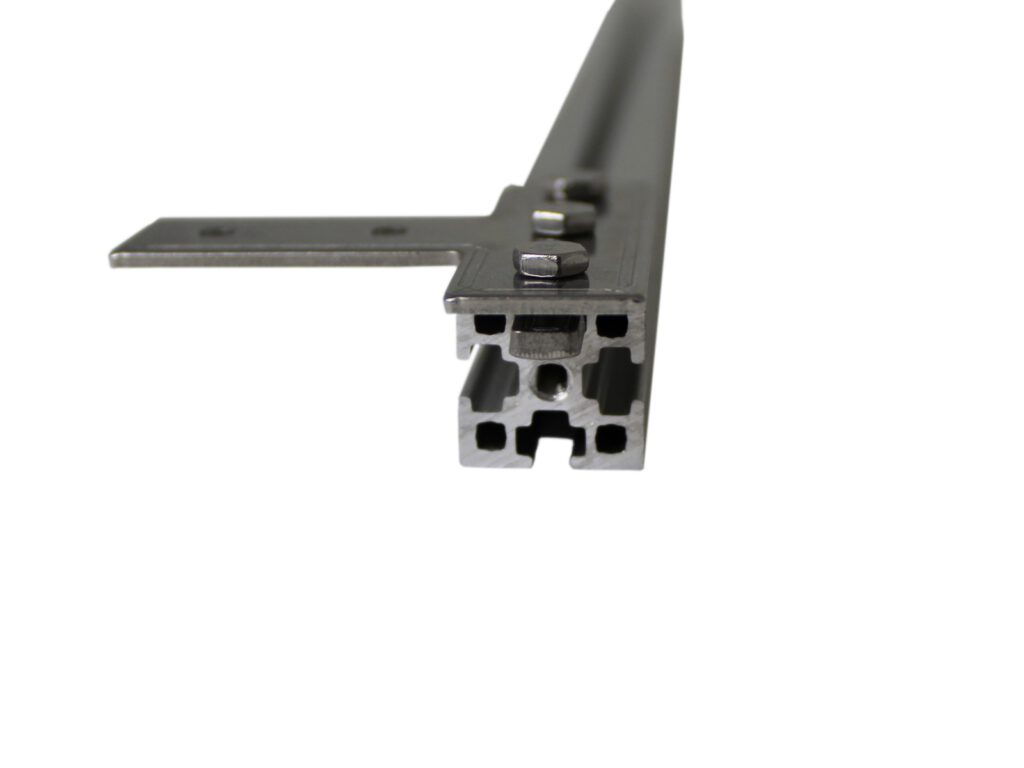
We’re happy to introduce the wing type bolt: the rectangular screw head of the wing type bolt gives the possibility to add screws midway. You can insert the screw midway of a beam and turn it  to ensure tightening. This  makes it easier to add brackets.

The wing type bolts come in a bag of 100 pcs and cost € 8,13.

Hinge bearings
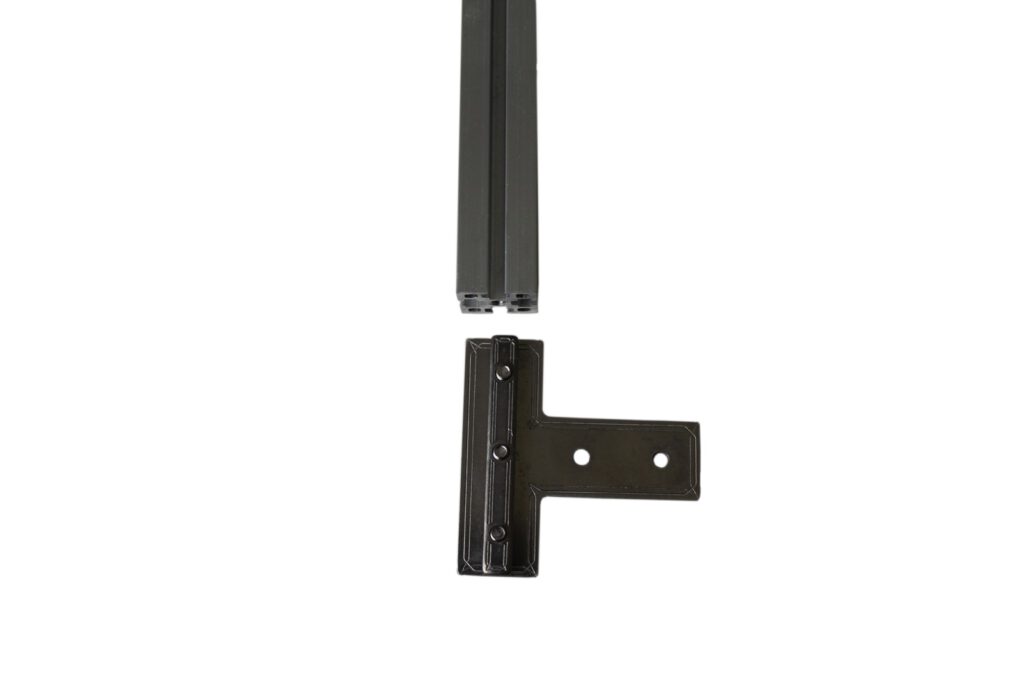
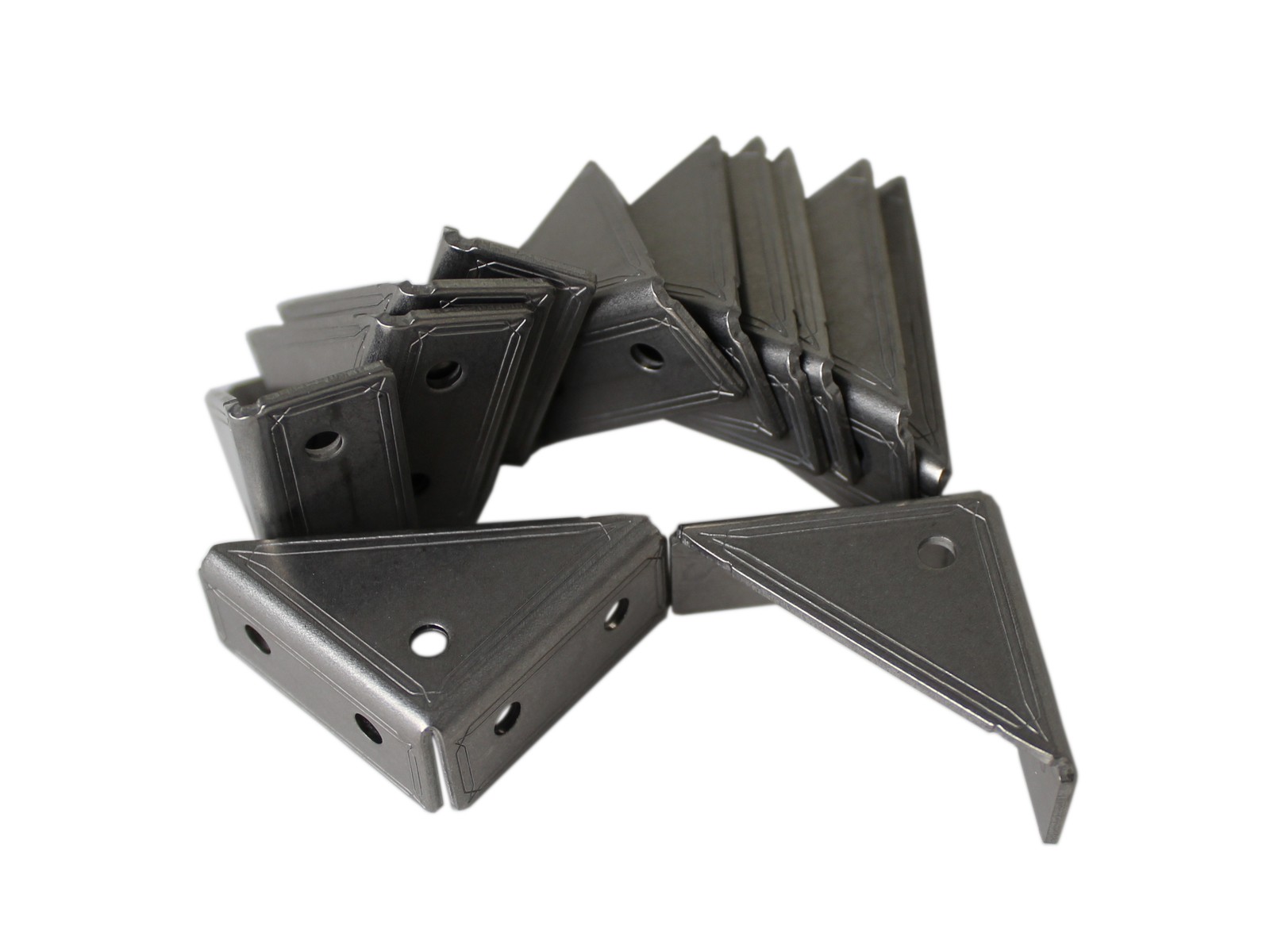
We came up with hinge bearings to extend building possibilities. Hinge bearings make it possible to rotate 2 beams relative to each other. You can use the standard bearing to have beams rotate around a fixed point or axis. Making a miniature trebuchet now is possible!
Hinge bearings are an assembled product consisting of
- Bearings (10 pieces)
- Copper saddle band clips (5 pieces)
- Axes (6 long bolts in 3 lengths: 3 cm, 5 cm and 6 cm)
- Teflon tape (18 cm)
- Square headed bolts (10 pieces)
- Nuts (10 pieces)

Hinge bearings cost €17,50.

We plan to include a manual to the hinge bearings soon.

Team MakerBeam.eu

Geplaatst in Accessories, Uncategorized, update | Getagd , | Een reactie plaatsen

MakerBeam’s test of the bolts: square headed vs serrated

The question
Earlier we introduced two types of bolts: the serrated head bottom and the square headed bolt (M3, 6mm length). What screw – serrated, square headed, with or without hexagon socket – should be the default MakerBeam screw?

The regular bolts worked for the old, non-anodised, beams that had surprisingly high friction. The new, anodised, beams have a harder and more smoother surface. A surface that provides less friction and occassionally left a round head spinning. We wanted to eradicate this problem. Especially since there always was the suspicion about makerbeam that tightening would be a issue.


Clearly we needed to find bolts that provided better grip. The square headed bolts were the best option we thought. Unfortunately enough the production time was unclear.  The serrated head bottom then was introduced as a temporary alternative.  When the square headed screws came in – surprisingly fast -  we decided to make these the default MakerBeam screws. Not everyone was pleased by that decision and we started to have our doubts. We needed more input and a test was put in place.

The jurors
Joel Bodenmann, MakerBeam fame: -3D printer (and reseller B-Electronics);
Sean Reynolds , MakerBeam fame: cSpring – the biped-robotic educational development kit that has a makerbeam frame (and founder of Cognitive Spring);
Anders Roxenhag, MakerBeam fame:  a live plotter and a polar plotter we love;
Tinhead, MakerBeam fame: – The Stinger – a PCB milling machine (and Let’s Make Robots contributor).

The test results
Grip
: Compared to the regular bolt the square headed and the serrated provide more grip. Especially the square headed bolt.  Sean explains why: “The square heads provide more surface area that actually grips. The pinching area is essentially two triangular shapes rather than two small pinching partial circles.”

Fit: The square head bolt fits the makerbeam profile better than a round headed bolt.

Tightening: As you tighten the square headed bolts the bolt spins slightly inside the beam till the corner of the bolt hits the interior of the beam thus making two triangular contact areas. The square headed bolts tighten down stronger since they do not turn in the beam. As Tinhead expressed: “they work better as they do not turn once on the beam as with the normal round ones”. Round heads, serrated or not, definitely have a disadvantage here.  Therefore Anders sees no real purpose for the serrated head bottom screw in comparison to the square headed bolts.  Joel is a big fan of the serrated screw. “You can get the same amount of tightness witht the serrated bolts as witht the square headed ones.”  His issue with the square headed bolts comes when overtightening them.

Overtightening: Joel had overtightened the square headed screws and had problems removing them. Removing the square headed bolts could not be done without a tool. This damaged the thread of the screw rendering the screw useless.
Tinhead does not encounter this problem. He suspected that tightened hard the square headed bolts would lock against the beams. “This is not as bad as it sounds though, because two light taps on the beam with the screw driver get’s them loose again.”
Sean even thinks tightening the square headed bolts hard deforms the beams less than it did with the round heads. Since the contact area is larger.

Sliding: Most jurors mentioned the fact that sliding the square headed bolts into the beam is a bit harder. When making a construction the jurors prepare brackets. Anders: “I prepare the bracket with four bolts and attach the nuts with a few turns. Then I slide them into the beam.” The square headed bolts need to be aligned a bit before you can slide them in. This takes more work than before. Anders describes this best. “It [the necessary alignment of each bolt] does not happen every time and it is not a huge problem and if I had known nothing else, I would accepeted it as part of the workflow.”
For Joel it is another factor in favouring the round headed serrated screws. They slide in easier.
Sean completely accepted the new ‘workflow’. He was sceptic because of the ‘sliding’-issue. But now only uses the square headed bolts. The other screws need fiddling to get in. “They were so large that they barely fit in past the ends of the beam.” According to him these two amounts of effort – fiddling vs. aligning – are roughtly equal amounts of work.  Sean has become a fan of the square headed bolt.

Backwards compatibility: We like looking forward and this is why we had these bolts tested. But there is the issue of backwards compatibility. The square headed bolts work well with old makerbeams (v1.0) and the new beams. (v2.0). Here is a link to link to our blog post ‘Version 2.0′. The serrated did not fit very well with the old beams.

The result
Sean favours the square headed bolts. Working with his old beams Anders still likes the regular screws. With the new beams he prefers the square headed bolts. He sees no purpose for the serrated screws. Only the hexagon socket is head is “awesome”. Joel favours the serrated head bottom screws very much and absolutely dislikes the square headed bolts. Tinhead sums it up like this: “I would say between the three choices the square headed ones get the best of the other two, easy to slip in, easy to tighten, easy to get them out.”

The decision
The suspicion about MakerBeam that tightening would be a problem looms large. We realised this again upon discussing the results. Eradication of this suspicion is our main concern we realised. We feel the square headed bolts tackle this issue best. They provide a better grip and fit than other bolts. The square headed bolt will become the default MakerBeam bolt. Plus, we are looking into adding a hexagon socket on the head. The serrated head bottom screws will gradually disappear from our stock.

Team MakerBeam.eu

Geplaatst in Uncategorized | Een reactie plaatsen

Brackets for servo motors and micro stepper motors

It is a fact the NEMA 17 brackets are in demand. What about servo motor brackets and brackets for micro stepper motors? We wanted to give it a try. Pieter Bos (@pieterbos) gave us a way out. He is the guy that makes our 3D printed end caps. 3D printing is a fun and easy way to try new ideas and 3D printers are very popular with makers. Why not have more 3D printed parts for sale in our shop? We asked Pieter and he started prototyping. You can see the steps he made in the picture below.

The first idea was to completely encapsulate the micro stepper motor. From there it went to the lean figure on the right. This design, printed in black,  will go on sale soon. They are printed in PLA – polylactic acid.

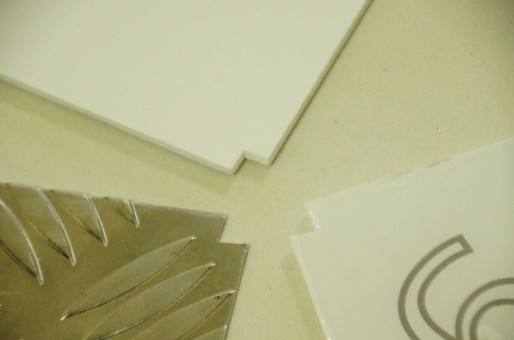
With the servo brackets we dismissed 3d printing but thought of laser cutting. This posed no problem for Pieter. He made some brackets and tried different materials.  From left to right: MDF, transparant perspex and finally opaque perspex (or polymethylmetacrylaat). We liked the last one the best. This one will go on sale soon.

Team MakerBeam.eu

Geplaatst in update | Getagd , , | Een reactie plaatsen

NEMA 17 bracket update 3

We ordered stainless steel NEMA 17 brackets. The samples came in and we were really pleased with their look, the polish and the MakerBeam artwork around the bracket. There was a surprise as well. Our manufacturer had added some aluminum anodised brackets in various colours. We thought the red bracket looked great. They go very well with our clear and black anodised beams. Below you will find a picture of the two.

A delivery time will be announced on our homepage soon.

Team MakerBeam.eu

Geplaatst in update | Getagd , | Een reactie plaatsen

NEMA 17 bracket problems update 2

Good news and bad news. The good news is that we ordered lots of MakerBeam NEMA 17 brackets made of stainless steel. The bad news is that we have to wait a while because of Chinese new year. We expect this new batch early March. We will post a message on our website as soon as they come in.

When we published the last update concerning the NEMA 17 brackets (end November 2012) we thought our NEMA problems were over. Good quality NEMA brackets for a good price! Unfortunately this did not prove to be durable solution. We were unable to order a second batch with this European manufacturer.

At this point we knew that the second manufacturer we had approached earlier (also European) was unable to deliver the NEMA brackets he had invoiced. Exit this manufacturer as well.  Now we knew we had to go find a manufacturer all over again.

It was then we the manufacturers we already have a good relationship with – those who we order the parts for our starter kit from – came back with good offers. We decided to go with our Asian partner.

Our wish for the new year – Chinese or other – is to have a hassle free supply, stock and sale of NEMA 17 brackets!!

Team MakerBeam.eu

Geplaatst in update | Getagd | Een reactie plaatsen

Starter kit content

We improved the content of the MakerBeam starter kit!

First, we decided to add a hex nut driver to every starter kit as a standard part of the kit. We feel with this the starter kit is a more complete product. The hex nut drivers we had were very expensive (wiha pico finish) or less effective (the small hex nut drivers). Now we have the best of both worlds with the our new hex nut drivers. One MakerBeam hex nut driver will be added to every starter kit from now. Important to mention is that the price of the starter kit remains the same!

The other improvement we made concerns the bolts. There was a blog post about new bolts recently. In that post we blogged about having received samples of square headed screws. We thought it would take a while before we would receive bags of this type of chamfered square headed bolts. To our surprise we have them here already! From now on you can find a bag (+/-250pcs) of these bolts in every starter kit instead of the ‘old’ 6mm bolts.

The screws with the serrated head bottom will be on sale for a while to come.  In our opinion the square headed screws are the better option for our starter kit. We had good reviews about the serrated type screws, but the square-headed screws will end any occurrence or suspicion of occurrence of problems with tightening once and for all.

Soon to come is a leaflet we are working on. We are also working on new products (brackets for bearings for example) and there is more to come ….

Team MakerBeam

Geplaatst in update | Een reactie plaatsen

MakerBeam.com

Sam Putnam was the one who came up with the idea of MakerBeam. You can find his story on Kickstarter. He thought of all the measurements, bracket types, quantities etc. and had the first batch made.Johan here thought it was a very good product. He backed Sam his Kickstarter campaign. Unfortunately Sam did not take his idea further. The next step, a website: makerbeam.com, remained ‘under construction’ for about three years. In 2011 we created the webshop makerbeam.eu and made makerbeam available here in Europe. We are happy to announce that MakerBeam.com is officially in our hands.  It is no longer under construction and redirects to makerbeam.eu.

We innovated the beams and we are planning to innovate the website as well.  MakerBeam.eu will pretty much stay as it is. We will renew our webshop on the Makerbeam.com address. So… we will try to avoid it but maybe you will stumble on an ‘under construction’  notice on the .com website again this year. Sorry!!!

Team MakerBeam.eu

Geplaatst in update | Getagd , , , | Een reactie plaatsen

New bolts

This blog post could as well be called ‘Buttons to suit MakerBeam 5′. We had problems with our screws and that is what the other blog posts were about. The other posts date from October 2011, December 2011, January 2012 and June 2012. Now we are testing a new bolt and there is another type of bolt in the making.

The pictures above give an overview of history of MakerBeam with bolts. From left to right there is the original bolt,  our own improvement, the 12mm version, the new screw with serrated head bottom and a sample of a square-headed screw.

The picture to the left shows the original bolt 6mm length. We had hoped regular M3 screws would fit the Makerbeam profile. In the old version a regular bolt would rarely fit. This was in the back of our minds when we made our version 2.0 of the beams. Despite creating more room to accomodate the screws regular M3 screws still do not fit like we had hoped.  The curvature is what hinders regular screws to fit. Otherwise the screws we sell are completely in line with the DIN standard 7380 (see ‘Buttons to suit MakerBeam 1).
We thought that some purposes, like using bearings, needed longer screws. Since we continously look to improve our product we consequently had them made in 12mm length. The picture above on the right shows the 6mm and the 12mm length.

Already then we were looking for other options to optimize grip. We thought of using washers. This idea was dismissed, too much of a hassle. Just when we thought we could not improve on the screw there was the suggestion of using bolts with a serrated head bottom, see picture above on the left. The serration gives the bolts a little more gripping quality. These serrated screws are available now. A bag with about a 100 pieces will be added to every starter kit to test them.

Another screw we are looking at is square-headed. Since using regular screws still is not much of an option we can set our goal differently: total grip all of the time.  We received  unpolished samples of square-headed screws that are chamfered a bit. Grip is absolutely secured using these screws. A sample is pictured above on the right. They have a downside though. They damage the surface a bit. Despite this downside we are thinking of these screws as the replacement of the screws we currently sell.
Occasionally we receive a message from a customer telling us that sometimes tightening a screw is not possible. Tightening is not a common problem, but still these square-headed screws will end any occurrence once and for all.

Do not think we are done once the square-head bolts are for sale.  Still on our wish list is a screw with a rectangular screw head. Think of a screw head with wings. A rectangular screw head will will give the possibility to add screws midway. You can insert the screw midway of a beam and turn it 90 degrees to ensure tightening. This will make it easier to add screws to an almost finished structure.

Team MakerBeam.eu


Geplaatst in Uncategorized | 2 Reacties

A great time for makers

It is a great time to be a maker! Equipment to make all sorts of machinery is more and more available for a good price. Sparkfun, Arduino and Adafruit have made a name in accessible electronics. More and more modular systems to construct a suitable framework for your own invention are coming on the market as well. Open source hardware is booming.

There are the systems based on a repetitive hole pattern (Bitbeam, Contraptor) and the t-slot style systems (OpenBeam and our own MakerBeam). Makeblock combines both styles. Leaving repetitive hole pattern systems aside, what is the difference between these open source t-slot style systems?

MakerBeam sells beams that are 10mmx10mm and available in different precut lengths. Longest beam available is 900mm. There is a precut kit available (lengths from 40mm to 300mm). The beams are an extruded aluminum construction profile. The profile is a simple mini T-slot. The beams are black or clear anodized. The plates and brackets are stamped metal. The beams and brackets can be connected with makerbeam bolts. Size used is M3. We do not sell electronics. On our website you can find specifications and a link to Thingiverse. On Thingiverse you can find design files for makerbeams and additional 3D objects.

OpenBeam created beams that are 15mmx15mm and normally available in a length of 1000mm. There is a precut kit available (lengths 30-300mm).  The beams are an extruded aluminum construction profile. The profile is an intricate mini T-slot. The plates are injection molded out of a high performance fiberglass reinforced plastic to make it affordable. The beams and plates can be connected with standard M3 nuts and bolts. They do not sell electronics. You can download design files.

Makeblock is an aluminum extrusion based construct platform. The beams and brackets have repetitve hole patterns and a threaded slide combining the two systems widely used. The beams are available in 8mmx8mm and 8mmx24mm in two different colours, blue and gold. They sell several matching brackets, plates and pulleys. There are different kits available, including one that is lego compatible and a kit designed to be used for education. They do sell electronics. According to their website they will be open about their product and release information on their website.

MakerBeam is only just spreading to webshops all over the globe. In 2009 there was a Kickstarter campaign for MakerBeam. This is how we got to know the product. Makerbeam started early but never fully profited from its momentum generated by Kickstarter. Only after MakerBeam.eu was introduced here in Europe it slowly got some attention. We love the size of the makerbeams. 10mmx10mm looks great, almost elegant.
We are working on our product range. There is a servo bracket in the making and a different solution for connecting bearings will be introduced in our shop soon. Brackets, other type of bearings, gears and gear racks are under consideration. The focus here is on ready available products. Manuals are something we would love to add to our product, but are still struggling to make. Kits are something we are looking into as well. Electronics are not on the menu for us though. We want to provide a professional easy prototyping framework that can be used by makers at home or in the workplace. We think MakerBeam is highly suitable for industrial use. The place where the T-slot originates.
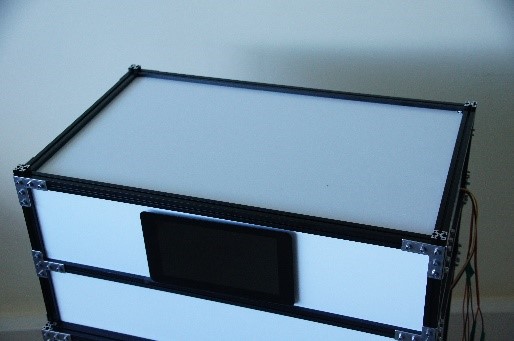
OpenBeam started with a kickstarter campaign this year. We already welcomed OpenBeam in April 2012 (see blog post then). OpenBeam is great because it addresses the problem we came across. Since the MakerBeam profile uses the M3 standard we had hoped M3 bolts available in any hardware store would do. We got lucky on a few occasions, but finally we had to resort to making our own 12mm MakerBeam bolts. Nice as this sounds it is not what we aspire. Remember that we are not the creators of MakerBeam. We are selling makerbeam and try to make it available on the market.  It is great that OpenBeam tries to resolve this and it will definitely attract customers with its compatibility to standard M3 bolts. Also we expect Terence Tam, the man behind OpenBeam, to come up with other products and manuals.

Now there is a kickstarter campaign for Makeblock. Makeblock offers just about everything. They are good and their goal is to add even more new components. A small production run took place for most of the parts. For these parts Makeblock is looking to start mass production. They are kickstarting from a different point.
Their goal is to provide a full range of solutions. It looks like they are fully equipped to do so. Makeblock looks more finished. Lego is often used in reference to open source hardware. It provides a recognizable standard. Makeblock gives the feeling of being the aluminum lego version. Absolutely wonderful and very appealing but not sure whether it will suit everyone.

Kickstarter campaigns open source hardware

Backers Goal Pledged Time
MakerBeam 132 10,000 17,922 September 2009
OpenBeam 534 30,000 100,825 March 2012
Makeblock 192 30,000 104,453 (closes end of January 2013) December 2012


In the 2009 MakerBeam kickstarter campaign it is mentioned that MakerBeam is thought to be the first open source construction set made available through crowdfunding. It is not enough to run a good Kickstarter campaign. The product needs to be available to customers as well. Things went quiet around MakerBeam for a long time. By making it available people start working with makerbeams and new components or 3D printed designs are being developed.

Makeblock and OpenBeam make better use of their kickstarter campaigns. The open source hardware community is benefiting from this.

It is a great time to be a maker!

Team MakerBeam.eu

With a very special thanks to Low-Tech Magazine and its article titled: How to Make Everything Ourselves: Open Modular Hardware

Geplaatst in Uncategorized | Getagd , , , | 1 reactie

Hex nut driver makerbeam

We added a new hex nut driver to our range of accessories.  It is the very first makerbeam branded accessory! We love it. Not just because of the name. That is just a nice touch. We love it because this hex nut driver is suited for both 6mm and 12mm length bolts. It also fits our M3 nuts well.

This hex nut driver, or nut spinner, comes to replace the other hex nut drivers we have for sale.  The small hex nut driver and the regular hex nut driver are no longer available in our shop. The small one could not handle the 12mm length bolts we sold. The regular hex nut driver we thought was too expensive.

The new makerbeam hex nut driver, as mentioned, is suited for both lengths. Plus it is available for a good price.  The third aspect of this nut spinner we love!

Team MakerBeam.eu

4.50 €

Price includes VAT, without delivery

Customers from non EU-countries are not subject to VAT

Our hex nut driver is suited for standard M3 nuts and differnt bolt lengths. Our hex nut driver is suited for both the 6mm and the 12mm length bolts we sell.
Geplaatst in Accessories | Getagd , , , , | 1 reactie